
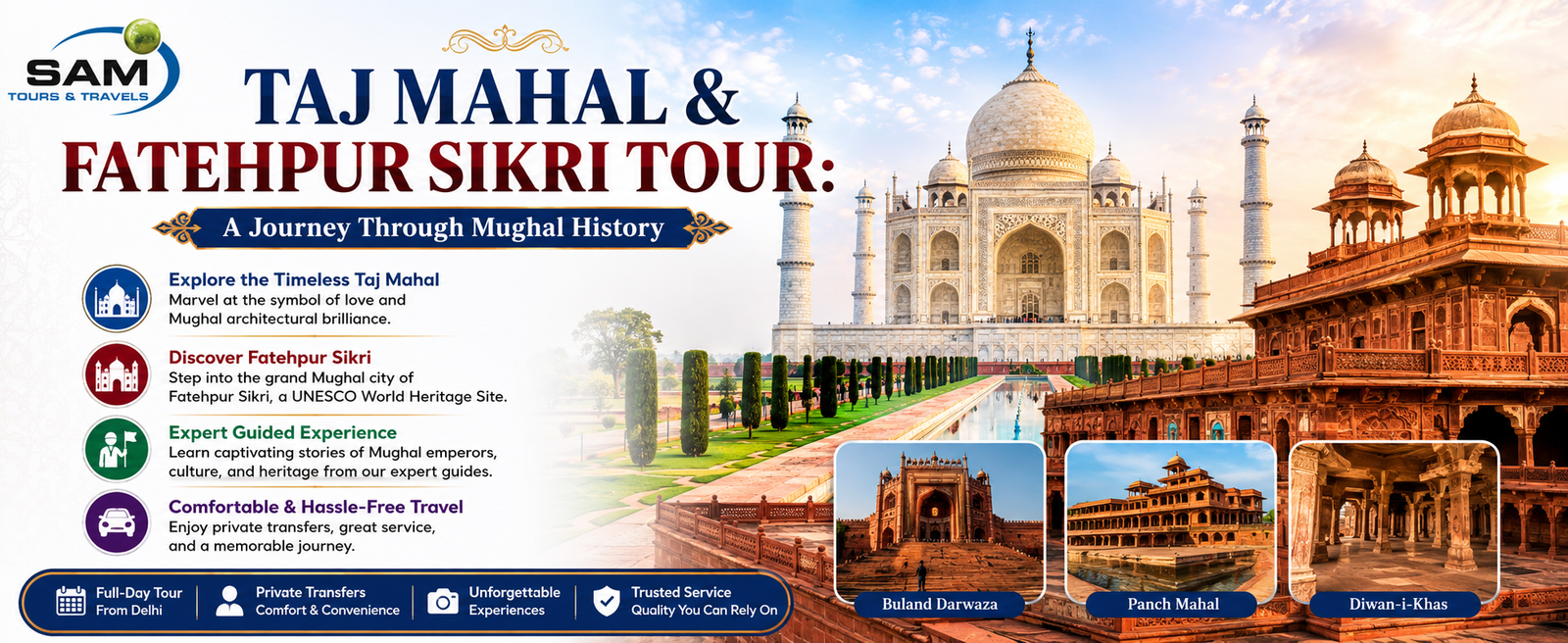
India’s rich heritage is beautifully reflected in its magnificent monuments, and few places capture the grandeur of the Mughal Empire better than the Taj Mahal and Fatehpur Sikri. A Taj Mahal & Fatehpur Sikri Tour offers travelers a fascinating opportunity to step back in time and explore two of the most iconic UNESCO World Heritage Sites in India. This unforgettable journey combines breathtaking architecture, royal history, cultural significance, and remarkable stories that continue to attract visitors from around the world.
Whether you are a history enthusiast, architecture lover, photographer, or traveler seeking a deeper understanding of India’s past, this tour promises an enriching experience that showcases the brilliance of Mughal civilization.
Why Choose a Taj Mahal & Fatehpur Sikri Tour?
A visit to both the Taj Mahal and Fatehpur Sikri allows travelers to witness different chapters of Mughal history. While the Taj Mahal symbolizes eternal love and architectural perfection, Fatehpur Sikri reflects Emperor Akbar’s vision, leadership, and cultural inclusiveness.
This tour is popular because it offers:
- Two UNESCO World Heritage Sites in one trip
- Rich historical and cultural experiences
- Stunning Mughal architecture
- Excellent photography opportunities
- Convenient access from Delhi and Agra
- Educational value for families and students
The combination of these historic sites creates an unforgettable travel experience for visitors of all ages.
The Story Behind the Taj Mahal
The Taj Mahal stands as one of the most admired monuments in the world. Located on the banks of the Yamuna River in Agra, this white marble masterpiece was commissioned by Mughal Emperor Shah Jahan in memory of his beloved wife Mumtaz Mahal.
Construction began in 1632 and took more than twenty years to complete. Thousands of artisans, craftsmen, and laborers worked tirelessly to create what is now considered one of the finest examples of Mughal architecture.
Today, the Taj Mahal symbolizes love, devotion, and artistic excellence. Every year, millions of tourists visit this iconic monument to admire its beauty and learn about its remarkable history.
Architectural Wonders of the Taj Mahal
The Taj Mahal is renowned for its extraordinary design and craftsmanship. Every detail reflects the artistic skills of the Mughal era.
Some of its most impressive features include:
Magnificent White Marble
The monument is constructed using high-quality white marble that changes color throughout the day depending on sunlight and weather conditions.
Intricate Marble Inlay Work
Visitors can observe detailed floral patterns created using semi-precious stones embedded into the marble surface.
Grand Central Dome
The massive dome serves as the centerpiece of the monument and is one of the most recognizable architectural features in the world.
Beautiful Mughal Gardens
The surrounding gardens follow the traditional Charbagh layout, representing paradise according to Islamic traditions.
Elegant Calligraphy
Verses from the Quran decorate various sections of the monument, adding both beauty and spiritual significance.
Experiencing the Taj Mahal
Walking through the grand entrance gate and seeing the Taj Mahal for the first time is a memorable experience. The perfectly symmetrical structure, reflecting pools, and lush gardens create a breathtaking atmosphere.
Visitors often spend several hours exploring:
- The main mausoleum
- Marble details
- Garden pathways
- Photography viewpoints
- Historical exhibits
Many travelers choose guided tours to gain deeper insights into the monument’s history and construction.
Journey to Fatehpur Sikri
After exploring the Taj Mahal, the journey continues to Fatehpur Sikri, located approximately 40 kilometers west of Agra.
Built by Emperor Akbar in the late 16th century, Fatehpur Sikri served as the capital of the Mughal Empire for a short period. Although it was later abandoned due to water shortages, the city remains remarkably preserved and continues to attract history lovers from around the world.
The Historical Importance of Fatehpur Sikri
Fatehpur Sikri represents one of Emperor Akbar’s greatest achievements. The city was designed as a symbol of political power, cultural harmony, and architectural innovation.
The architecture reflects a unique blend of:
- Persian influences
- Indian craftsmanship
- Islamic traditions
- Central Asian design elements
The city’s layout demonstrates advanced urban planning techniques that were far ahead of their time.
Major Attractions in Fatehpur Sikri
Buland Darwaza
The Buland Darwaza is one of the largest gateways in the world. Built to commemorate Akbar’s victory in Gujarat, this impressive structure stands approximately 54 meters high.
Its grand scale and intricate carvings make it one of the most photographed landmarks in India.
Jama Masjid
The Jama Masjid is among the largest mosques constructed during the Mughal era. Visitors admire its vast courtyard, elegant arches, and historical significance.
The mosque remains an active place of worship and an important symbol of Islamic architecture.
Tomb of Salim Chishti
The marble tomb of the Sufi saint Salim Chishti is one of the most revered sites within Fatehpur Sikri.
Many visitors tie threads on the marble screens while offering prayers and making wishes. The tomb’s intricate marble craftsmanship is considered one of the finest examples of Mughal artistry.
Diwan-i-Khas
This private audience hall served as a venue for important discussions and meetings.
Its famous central pillar features extraordinary carvings that showcase the creativity and engineering skills of Mughal architects.
Panch Mahal
The Panch Mahal is a five-story structure designed to provide ventilation and scenic views.
Its open design and graceful columns reflect the sophisticated architectural style of Emperor Akbar’s reign.
Understanding Mughal Culture Through the Tour
A Taj Mahal & Fatehpur Sikri Tour offers more than sightseeing. It provides valuable insights into the social, cultural, and political life of the Mughal Empire.
Visitors learn about:
- Royal traditions
- Mughal governance
- Religious tolerance under Akbar
- Artistic achievements
- Architectural innovations
These historical perspectives help travelers gain a deeper appreciation for India’s diverse heritage.
Best Time to Visit
The ideal season for a Taj Mahal & Fatehpur Sikri Tour is from October to March.
During these months:
- Weather remains pleasant
- Sightseeing is comfortable
- Photography conditions are excellent
- Walking around monuments is enjoyable
Early morning visits to the Taj Mahal are especially recommended because they offer fewer crowds and beautiful natural lighting.
Photography Opportunities
Photography enthusiasts will find countless opportunities throughout the tour.
At the Taj Mahal
Popular spots include:
- Main entrance gate
- Reflecting pool
- Garden walkways
- Marble platform
At Fatehpur Sikri
Photographers often capture:
- Buland Darwaza
- Ancient courtyards
- Palace interiors
- Decorative stone carvings
Both destinations provide unique perspectives and visually stunning compositions.
Travel Tips for a Comfortable Tour
To enjoy a smooth and memorable journey, consider the following tips:
Book Tickets in Advance
Advance bookings help avoid long waiting lines and save valuable travel time.
Hire a Professional Guide
An experienced guide can explain the historical significance of each monument and share fascinating stories that bring the sites to life.
Wear Comfortable Footwear
Both locations require extensive walking, making comfortable shoes essential.
Carry Travel Essentials
Keep the following items with you:
- Water bottles
- Sunglasses
- Sunscreen
- Camera
- Identification documents
These essentials contribute to a comfortable sightseeing experience.
Why This Tour Appeals to Every Traveler
One of the greatest strengths of a Taj Mahal & Fatehpur Sikri Tour is its broad appeal.
History Enthusiasts
Visitors interested in history can explore important chapters of the Mughal Empire.
Architecture Lovers
The monuments showcase some of the finest architectural achievements in the world.
Families
Children and adults alike enjoy learning about India’s cultural heritage.
Photographers
The monuments provide endless opportunities for capturing stunning images.
International Tourists
Travelers gain valuable insights into India’s rich and diverse history.
Conclusion
A Taj Mahal & Fatehpur Sikri Tour: A Journey Through Mughal History offers an extraordinary opportunity to explore two of India’s most treasured heritage sites. From the romantic elegance of the Taj Mahal to the royal grandeur of Fatehpur Sikri, every moment of the journey reveals stories of power, culture, creativity, and architectural brilliance.
These remarkable monuments continue to inspire millions of visitors each year and serve as enduring symbols of the Mughal Empire’s legacy. Whether you are visiting India for the first time or returning to explore its historical wonders, this tour provides an unforgettable experience filled with beauty, knowledge, and cultural discovery.
For travelers seeking a meaningful connection with India’s past, a Taj Mahal & Fatehpur Sikri Tour remains one of the most rewarding journeys through Mughal history.