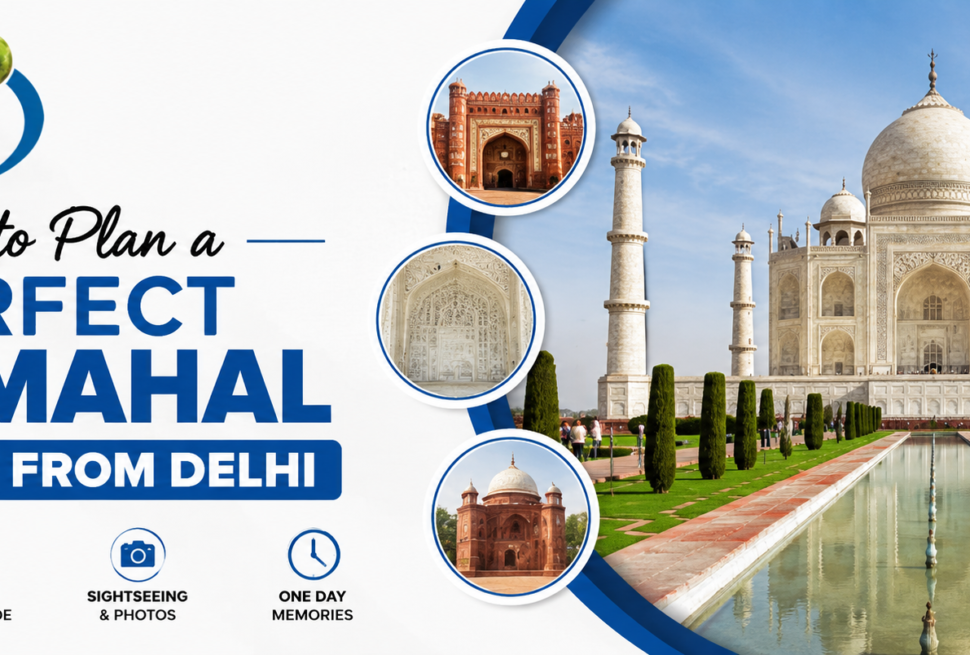
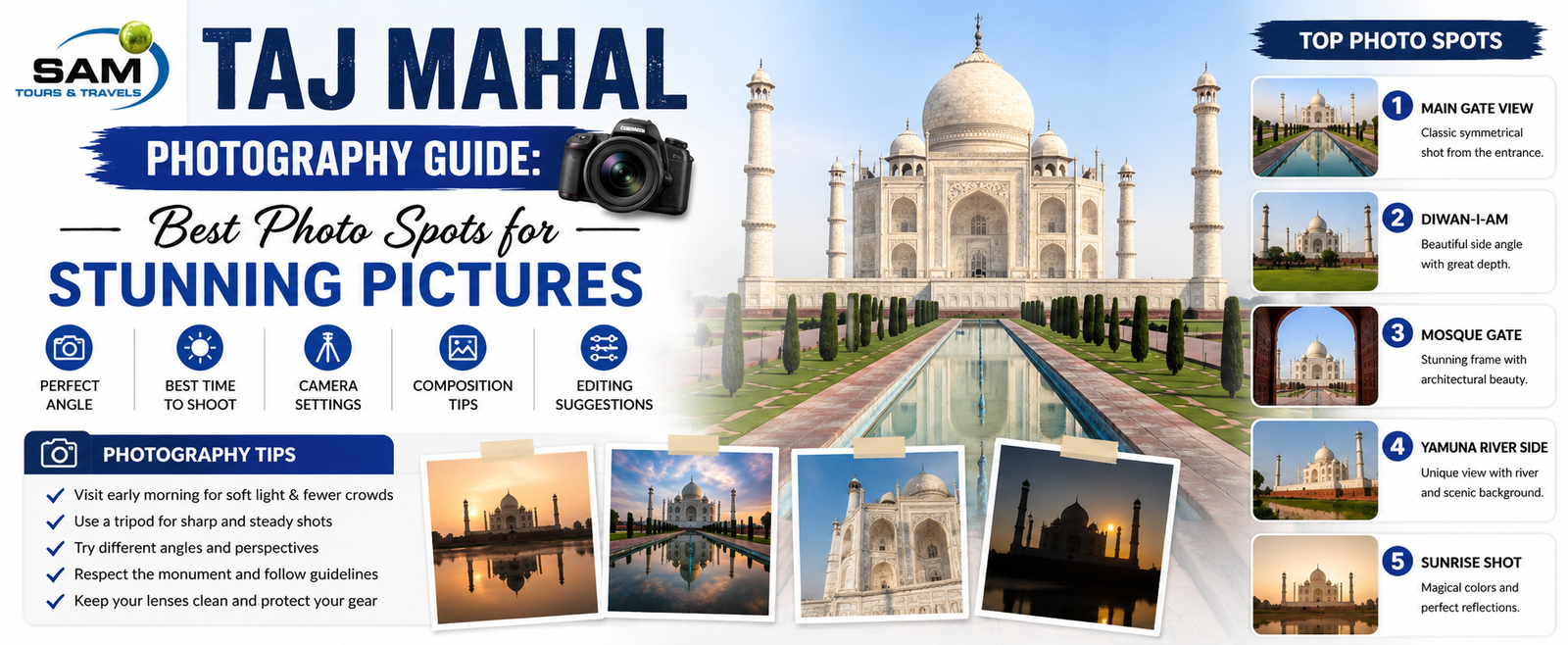
The Taj Mahal is one of the most photographed monuments in the world. Every year, millions of travelers visit Agra to capture the beauty of this iconic white marble masterpiece. Whether you are a professional photographer, a travel blogger, an Instagram enthusiast, or simply someone who loves taking memorable pictures, the Taj Mahal offers countless opportunities for breathtaking photography.
However, getting the perfect shot requires more than just pointing your camera at the monument. The right timing, location, lighting, and angles can make a huge difference. In this complete Taj Mahal Photography Guide, you’ll discover the best photo spots, photography tips, camera settings, and hidden viewpoints that will help you capture unforgettable images.
Why the Taj Mahal Is Perfect for Photography
The Taj Mahal is a dream destination for photographers because it combines architectural beauty, symmetry, history, and natural surroundings.
Some reasons photographers love the Taj Mahal include:
- Stunning white marble architecture
- Perfect symmetrical design
- Beautiful Mughal gardens
- Reflection pools
- Sunrise and sunset lighting
- Intricate carvings and details
- Unique viewpoints from different angles
Every part of the monument offers something worth photographing.
Best Time for Taj Mahal Photography
Lighting is one of the most important factors in photography. Choosing the right time can dramatically improve the quality of your images.
Sunrise Photography
Sunrise is widely considered the best time to photograph the Taj Mahal.
The early morning light creates soft pink and golden tones on the marble surface. In addition, the crowds are smaller, allowing you to capture cleaner compositions.
Benefits of Sunrise Photography
- Soft natural lighting
- Fewer tourists
- Better reflections
- Comfortable weather
- Beautiful colors
Most professional photographers arrive before sunrise to take advantage of the changing light.
Morning Photography
The hours between 7:00 AM and 10:00 AM are also excellent for photography.
The monument remains well-lit, visibility is clear, and the weather is usually pleasant.
Sunset Photography
Sunset offers a completely different atmosphere.
As the sun begins to set, the Taj Mahal often takes on warm orange and golden tones. Sunset photography is particularly popular at viewpoints outside the monument complex.
Best Taj Mahal Photo Spots
1. Main Entrance Gate
The first and most iconic photography location is the grand entrance gate.
As visitors walk through the massive red sandstone arch, the Taj Mahal appears perfectly framed in the center.
Why It’s Popular
- Classic composition
- Symmetrical framing
- Excellent first impression
- Great portrait location
Many visitors capture their very first Taj Mahal photograph from this viewpoint.
2. Reflection Pool
The Reflection Pool is probably the most famous photography spot inside the complex.
Located along the central pathway, this pool creates beautiful reflections of the monument.
Photography Tips
- Shoot from a low angle
- Arrive early before crowds arrive
- Use portrait orientation
- Focus on the reflection
This location produces some of the most recognizable Taj Mahal photographs.
3. Princess Diana Bench
The Princess Diana Bench became famous after the late Princess Diana was photographed sitting here during her visit to India.
Today, it remains one of the most popular photography spots.
Why Visitors Love It
- Historic significance
- Clear Taj Mahal background
- Ideal solo portraits
- Perfect social media photos
Expect some waiting time, especially during peak tourist seasons.
4. Marble Platform
The marble platform surrounding the main mausoleum offers unique photography opportunities.
From here, you can photograph:
- Close-up architectural details
- Marble carvings
- Decorative inlay work
- Wide-angle monument views
Many photographers spend considerable time here capturing intricate details that most visitors overlook.
5. Side Garden Pathways
Most tourists stay on the central pathway. However, the side gardens provide quieter and more creative photography locations.
Benefits
- Fewer crowds
- Natural framing
- Unique perspectives
- Beautiful greenery
These locations work particularly well for portrait photography.
6. Mosque Side View
The mosque located on the western side of the complex offers a completely different perspective.
Photographers often use this area to capture:
- Red sandstone architecture
- Contrasting colors
- Side profiles of the Taj Mahal
- Artistic compositions
This location is less crowded than the main viewing area.
7. Jawab Building
The Jawab building sits opposite the mosque and mirrors its design.
Although many visitors overlook this structure, it offers excellent photography opportunities.
Advantages
- Balanced compositions
- Cleaner backgrounds
- Unique angles
- Architectural symmetry
Professional photographers frequently use this location for creative shots.
8. Mehtab Bagh
\Mehtab Bagh is one of the best places to photograph the Taj Mahal from outside the complex.
Located across the Yamuna River, this garden provides panoramic views of the monument.
Why Visit Mehtab Bagh
- Excellent sunset photography
- Fewer crowds
- Full monument views
- Unique compositions
Many postcard-style photographs of the Taj Mahal are taken from here.
9. Agra Fort Viewpoint
Few tourists realize that Agra Fort offers incredible views of the Taj Mahal.
From several locations within the fort, photographers can capture the monument from a distance.
Why It’s Special
- Historic significance
- Elevated views
- Different perspective
- Excellent storytelling images
This location connects the stories of Shah Jahan and the Taj Mahal in a powerful way.
10. Mehtab Bagh at Sunset
While Mehtab Bagh is already famous, sunset deserves special mention.
As the sun begins to disappear behind the horizon, the Taj Mahal glows with warm golden tones.
Many professional photographers consider this one of the best photography experiences in Agra.
Best Photography Ideas at the Taj Mahal
Reflection Photography
Use the Reflection Pool to create symmetrical images.
Portrait Photography
Position subjects on garden pathways or near the Princess Diana Bench.
Architectural Photography
Focus on:
- Domes
- Arches
- Minarets
- Marble carvings
Detail Photography
Capture:
- Floral patterns
- Stone inlays
- Arabic calligraphy
- Marble textures
These close-up images reveal the incredible craftsmanship of the monument.
Photography Tips for Visitors
Arrive Early
Early morning provides the best lighting and smaller crowds.
Explore Different Angles
Don’t limit yourself to the central pathway.
Use Natural Light
Natural lighting produces the most attractive results.
Include People
Adding people to your photographs creates scale and visual interest.
Be Patient
Wait for crowds to clear before taking important shots.
Best Camera Settings
For Smartphones
- Use HDR mode
- Enable grid lines
- Tap to focus
- Shoot during sunrise
For DSLR Cameras
Recommended settings:
- Aperture: f/8 to f/11
- ISO: 100–200
- Wide-angle lens
- RAW format
These settings help capture sharp and detailed images.
Photography Rules at the Taj Mahal
Before photographing the monument, be aware of the rules.
Allowed
- Smartphones
- Personal cameras
- Casual photography
Not Allowed
- Drones
- Tripods
- Large professional equipment without permission
Always follow instructions from security personnel.
Best Season for Taj Mahal Photography
The ideal months for photography are between October and March.
Benefits
- Pleasant temperatures
- Clear skies
- Better visibility
- Comfortable shooting conditions
Winter mornings often provide the most beautiful photography opportunities.
Common Photography Mistakes to Avoid
Many visitors make simple mistakes that affect photo quality.
Avoid:
- Visiting during midday heat
- Ignoring side viewpoints
- Taking only wide shots
- Arriving late
- Forgetting to clean camera lenses
Small improvements can significantly enhance your results.
Conclusion
The Taj Mahal is one of the most photogenic monuments on Earth. From the famous Reflection Pool and Princess Diana Bench to the hidden viewpoints of Mehtab Bagh and Agra Fort, every location offers a unique perspective of this architectural wonder. By choosing the right time, exploring different angles, and following basic photography principles, you can capture stunning images that truly showcase the beauty of the Taj Mahal.