
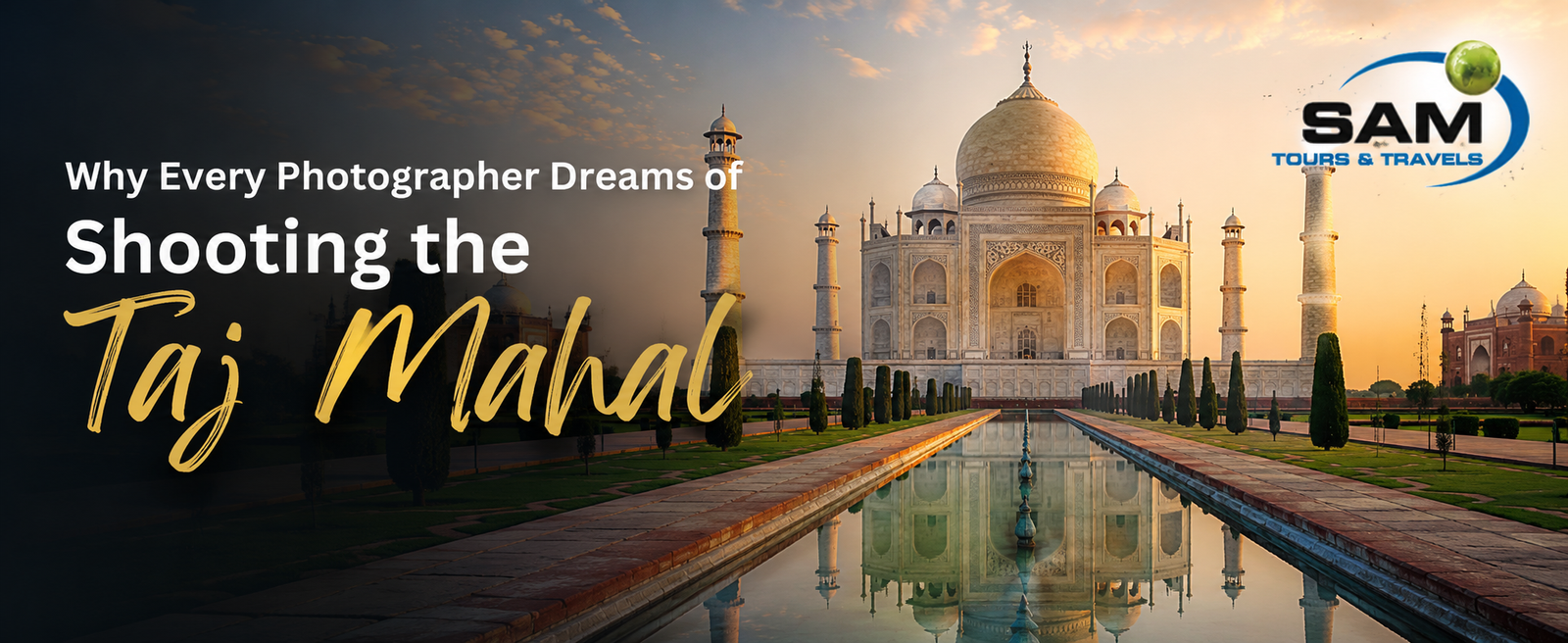
For photographers, some places are more than just travel destinations—they are bucket-list experiences. The Taj Mahal is one of those rare locations that every photographer dreams of capturing at least once in their lifetime.
Located in Agra, India, the Taj Mahal is not only one of the Seven Wonders of the World but also one of the most photogenic monuments ever created. Its perfect symmetry, changing colors, intricate details, and emotional story make it a paradise for photographers of every skill level.
Whether you’re a professional photographer carrying thousands of dollars of equipment or a traveler using a smartphone, the Taj Mahal offers endless opportunities to create unforgettable images.
A Monument Designed for Perfect Photography
One reason photographers love the Taj Mahal is its extraordinary symmetry.
The monument was carefully designed so that almost every element mirrors the opposite side. The gardens, pathways, pools, and minarets create balanced compositions that naturally appeal to the human eye.
For photographers, symmetry is a powerful visual tool. It creates harmony, draws attention to the subject, and makes images more striking.
The Taj Mahal offers perfect symmetry from almost every angle, making it one of the easiest monuments in the world to photograph beautifully.
The Taj Mahal Changes Color Throughout the Day
Most monuments look similar from morning until evening.
The Taj Mahal is different.
As sunlight changes, the white marble reflects different colors and tones.
At Sunrise
The monument often appears pink and peach.
During the Morning
It displays a soft white glow.
At Midday
The marble becomes brilliantly bright white.
At Sunset
Golden and orange hues appear across the surface.
Under Moonlight
The Taj Mahal can look silver and almost magical.
For photographers, this means every hour presents a completely new opportunity to create unique images.
Sunrise Photography Is Unforgettable
Ask any experienced travel photographer about the best time to photograph the Taj Mahal, and most will say sunrise.
As dawn breaks over Agra, the monument slowly emerges from the darkness.
The soft morning light creates:
- Gentle shadows
- Warm colors
- Clear reflections
- Peaceful atmosphere
Because visitor numbers are lower during sunrise, photographers can also enjoy cleaner compositions with fewer people in the frame.
Many photographers travel halfway around the world specifically to capture the Taj Mahal at sunrise.
Every Angle Offers a Different Perspective
Unlike many landmarks that have one famous viewpoint, the Taj Mahal provides countless photographic opportunities.
Main Entrance Gate
The grand gateway perfectly frames the monument.
Reflection Pool
One of the most iconic photography locations in India.
Princess Diana Bench
A famous portrait location for visitors.
Garden Pathways
Perfect for creative compositions and portrait photography.
Mehtab Bagh
Offers stunning sunset views from across the Yamuna River.
Agra Fort
Provides a unique historical perspective of the Taj Mahal from a distance.
Because of these varied viewpoints, photographers can spend hours exploring and still discover new compositions.
The Details Are Just as Beautiful as the Monument
Many first-time visitors focus only on photographing the entire structure.
However, photographers quickly realize that the details are equally impressive.
The Taj Mahal is filled with:
- Marble carvings
- Floral patterns
- Precious stone inlays
- Arabic calligraphy
- Geometric designs
These elements provide endless opportunities for close-up photography.
A single wall can inspire dozens of unique photographs.
A Photographer’s Dream During Every Season
The Taj Mahal offers something different throughout the year.
Winter
Morning fog creates a mysterious atmosphere.
Spring
Pleasant weather and clear skies provide ideal conditions.
Monsoon
Dark clouds add drama and mood to photographs.
Summer
Bright sunlight highlights architectural details.
Each season allows photographers to capture a different side of the monument.
The Story Behind the Monument Adds Emotion
Great photography is not only about beauty.
It’s also about storytelling.
The Taj Mahal was built by Emperor Shah Jahan in memory of his beloved wife Mumtaz Mahal.
This powerful love story adds emotional depth to every image.
Photographers are not simply capturing a building—they are documenting one of the world’s most famous symbols of love.
This emotional connection makes Taj Mahal photographs even more meaningful.
Perfect for Every Type of Photographer
One of the most remarkable things about the Taj Mahal is its universal appeal.
Landscape Photographers
Love the wide views and dramatic scenery.
Architecture Photographers
Admire the monument’s symmetry and craftsmanship.
Portrait Photographers
Use the monument as a stunning backdrop.
Travel Photographers
Capture cultural and historical stories.
Smartphone Photographers
Can easily create beautiful images without professional equipment.
The Taj Mahal offers something valuable for every style of photography.
The Reflection Pool Creates Iconic Images
The long reflecting pool in front of the monument is one of the most photographed locations in the world.
When conditions are calm, the pool reflects the entire structure.
This creates:
- Perfect symmetry
- Stunning reflections
- Eye-catching compositions
Many of the most famous Taj Mahal photographs have been taken from this location.
The Light Is Always Changing
Photography is often described as the art of capturing light.
At the Taj Mahal, light constantly changes throughout the day.
Clouds move across the sky.
Sunlight shifts position.
Reflections change.
Shadows lengthen.
These subtle variations ensure that no two photographs are ever exactly the same.
Even photographers who visit repeatedly continue discovering new opportunities.
Why Professional Photographers Keep Returning
Many photographers visit the Taj Mahal multiple times.
Why?
Because one visit is rarely enough.
Each trip offers:
- Different weather conditions
- New lighting situations
- Unique perspectives
- Fresh creative ideas
The monument rewards patience and exploration.
This is why it remains one of the world’s most photographed landmarks.
Photography Tips for the Taj Mahal
Arrive Early
Sunrise provides the best light and fewer crowds.
Explore Beyond the Main Path
Some of the best images come from lesser-known viewpoints.
Capture Details
Don’t focus only on wide shots.
Experiment With Reflections
Use pools and water surfaces creatively.
Be Patient
Sometimes the best photograph comes after waiting for the perfect light.
Conclusion
The Taj Mahal is much more than a famous monument. It is a masterpiece of architecture, light, symmetry, and emotion. From its changing colors and breathtaking sunrise views to its intricate details and powerful history, every aspect of the Taj Mahal inspires creativity. This is why photographers from around the world dream of standing before this iconic landmark with a camera in hand. Whether you’re a professional or a beginner, photographing the Taj Mahal is an experience you’ll never forget.